Creating the Rovers, Pt. 2 📖
almost 2 years ago
– Fri, May 31, 2024 at 12:46:02 PM

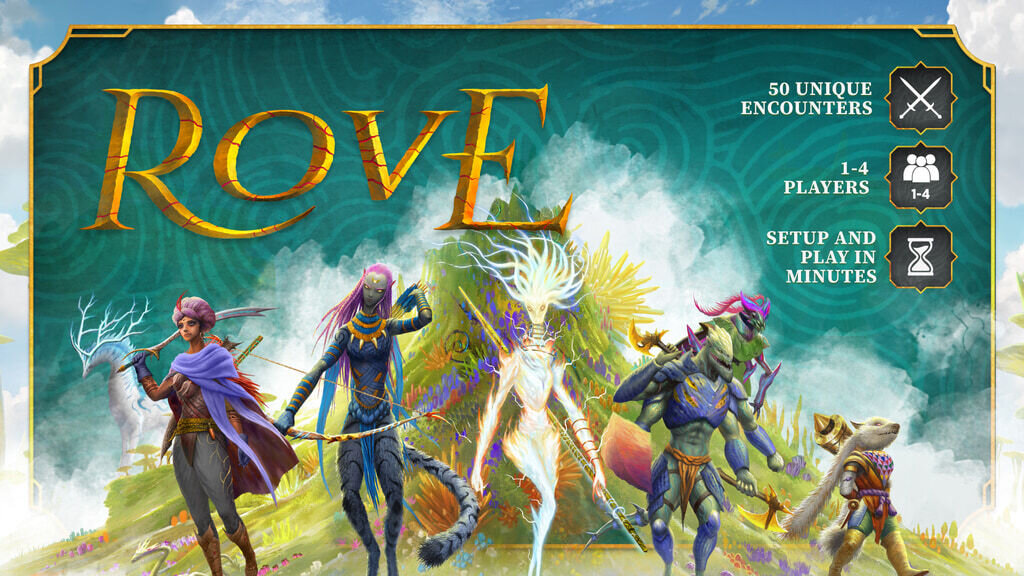
🪶Charles: Charles here again, back with part two about the creation of the Rovers! It’s no coincidence that we’ve presented the different peoples in the order we have; it also largely mirrors their order of conceptualization! Design is always an iterative process and the dynamics of our “society” were no different.
The last post covered the species that could be considered extremophiles. With the starlings, they exist anywhere but are equally comfortable in the churning depths of the ocean and the roiling heat of a volcano, to say nothing of a comfortable grassy plain. The keb rasska need loads of space to handle their colony growth so you often see them claim the large empty stretches of caverns or savanna. To the edges of any region in Chorus are the tihfur–comfortable in their ability to control their own territory and so fear the threat of beasts less than most clan groupings do.
At some point soon we’ll be going over how society is spread across the world but the general structure is the same in most places: Smaller clans with cultural biases formed of a given group of people. With starlings spread far and wide, keb rasska filling out dark caverns, and tihfur roughing it in the wilds, we needed people that would work better as “social glue”, which brings us to our remaining sapients!

I was given free reign to create somebody to join our cast of characters, and as ever the instinct was to fill in the gaps we had. The reason that two of our elements are referred to as the “Major Anima” was because they would serve as the literal animating force of a given creature. This is of course not specifically true, but without microscopes and spectrometers it becomes something of a “best guess” for the denizens of Chorus.
Morph was the foundation for the keb, with their abilities to seize and manipulate brain chemistry, as well as the tihfur, with their body-shifting and other bodily disruptions. The starlings start from either end and don’t have a primary anima, so we need a proper direct representative of the element of Crux!
The smaller you are, the easier it is to turn you into a snack. Using the intangible aspects of Crux, zusag are able to wield their affinity for this ether to craft illusions and other distractions to elude predators and evade detection. In their nascent days these illusions were quite unrefined, but zusag cultures have grown to be about showing off how refined your techniques using it (and other methods) are. Knowing is half the battle, and so zusag cultures prize the collection of information as the key to success in all fields. That means that graphics-wise and narrative-wise, zusag function as sort of a universal anchor for the presentation of “information”.
With gameplay that features a zusag, mischief and trickery are paramount. You are a smug, difficult-to-pin-down jackalope. A zusag that dons the mantle of Rover will have to keep a more open mind and incorporate techniques they might not have considered before striking out to maximize their effect in battle.
🎲 Tyvan Grossi: I established some clear design goals with this class from the start. We were concerned we hadn’t given players enough options to mitigate damage, so that made it clear to me that the Sophist needed to have some meaningful options to protect their team, if they wanted to. I liked the idea of having a tank themed class that wasn’t about absorbing damage like the True Scale, but about avoiding that damage. I also really connected with the light construct theme of the race. A diminutive people who can fashion their thoughts into living light? Yea, I can make a mechanic out of that.
The Sophist became this class that combined the guile of air with pushing and pulling their enemies and the bolstering effects of crux, the Chorus embodiment of will. For this write up I’ll focus on glyphs, the most unique mechanic of the Sophist. Glyphs are tokens that you can put onto the map. On their own glyphs don’t do much. Units that occupy a glyph may gain a bonus or a disadvantage, depending on the glyph and its passive effects, but the real magic comes from the Sophist. The sophist can move their glyphs, fire off attacks of heals from their glyphs, detonate their glyphs as traps, and much more.
The Sophist is a bit of a thinky class. If you like more crunchy rules or like skills that make you feel like you’re outsmarting the enemy, this is a great class for you.
Human
Motti always knew that humans were going to be involved in the world of Chorus. The challenge is, of course, humans need to stand out in their own unique way. I’m sure we’ve all played RPGs where humans end up as the catch-all or jack-of-all-trades type and we absolutely wanted to avoid that for Rove.
Something we came to was that humans in fiction often seem to “end up” in places. Through whatever scheme they plotted, or series of events outside of their control, we end up with humans in a place that everyone else looks at and goes “how could you have possibly gotten here?”.

Humans do have a certain adaptability, that much is impossible to deny, so we do have a little touch of “jack of all”! Nobody else can singularly trawl the sands of a desert next to a starling, crawl through the deepest reaches of caverns with the keb rasska, haul themselves across the trees as a tihfur, or spall the mountaintops where the zusag frequently retreat, all at once. I don’t think that surprises anyone though. It’s why humans “end up” all over the world!
What really makes our humans stand out is a sense of empathy that the rest of “civilized” Chorus finds almost unsettling. It’s not just that humans are adaptable–it’s that we adapt ourselves for others. Not just other people, but even the more beastly denizens of Chorus. While the keb rasska have had some limited success at domestication and rearing of the subterranean creatures found throughout Chorus, it is a drop compared to how quickly and effectively humans can befriend creatures of all shapes and sizes. This also extends to your adversarial humans as well!
As with all of our playable characters, incorporating the thematic elements is very important to us. This means that no matter what you do with your human as a player you can expect to be supporting your friends–whether they be Rover or beast.
🎲 Tyvan Grossi: The Duner Dancer at first was a bit of a puzzle for me. Humans, in Chorus? When there are symbiotic bug and lizard people, transforming were people, overly verbose jackalopes, and people made of living ether, how can a human also be as interesting?
I liked the pitch about humans and their close relationships to animals. There’s a lot we can do with a summoner class. I couldn’t help but think of the fun, if not slightly terrible, 1982 movie, The Beastmaster. So, I knew this class would need skills and actions that allowed you to be a powerful frontline warrior, who can keep up with the more esoteric members of their party with the help of powerful beasts.
I couldn’t ignore the artwork of the class that Alexander drew, with the captivating woman and her playfully commanding a dust devil. The natural other mechanic for this class to explore would be a spell mage, longer range abilities that focused on controlling the battlefield. What’s fun about this mechanical hook is that you can combine the skill sets, the warrior and the spellmage, to become a spellsword who commands beasts. Yea, we have ourselves an interesting class for players to explore.


That wraps up this particular series of concept discussion! Thank you for sticking with us and please comment with what else you might want to read about the design or world of Chorus at large! Working on Rove with Motti and the Addax team has been a fantastic experience and I can’t wait to tell you more about it.
Want to receive more frequent updates?
You can find us here:
Facebook
Instagram
Discord
Thank you and until next time!
🪶Charles and the Addax Team


